
Baltic Leverage
The country stabilizing Europe's grid just threatened to pull the plug.
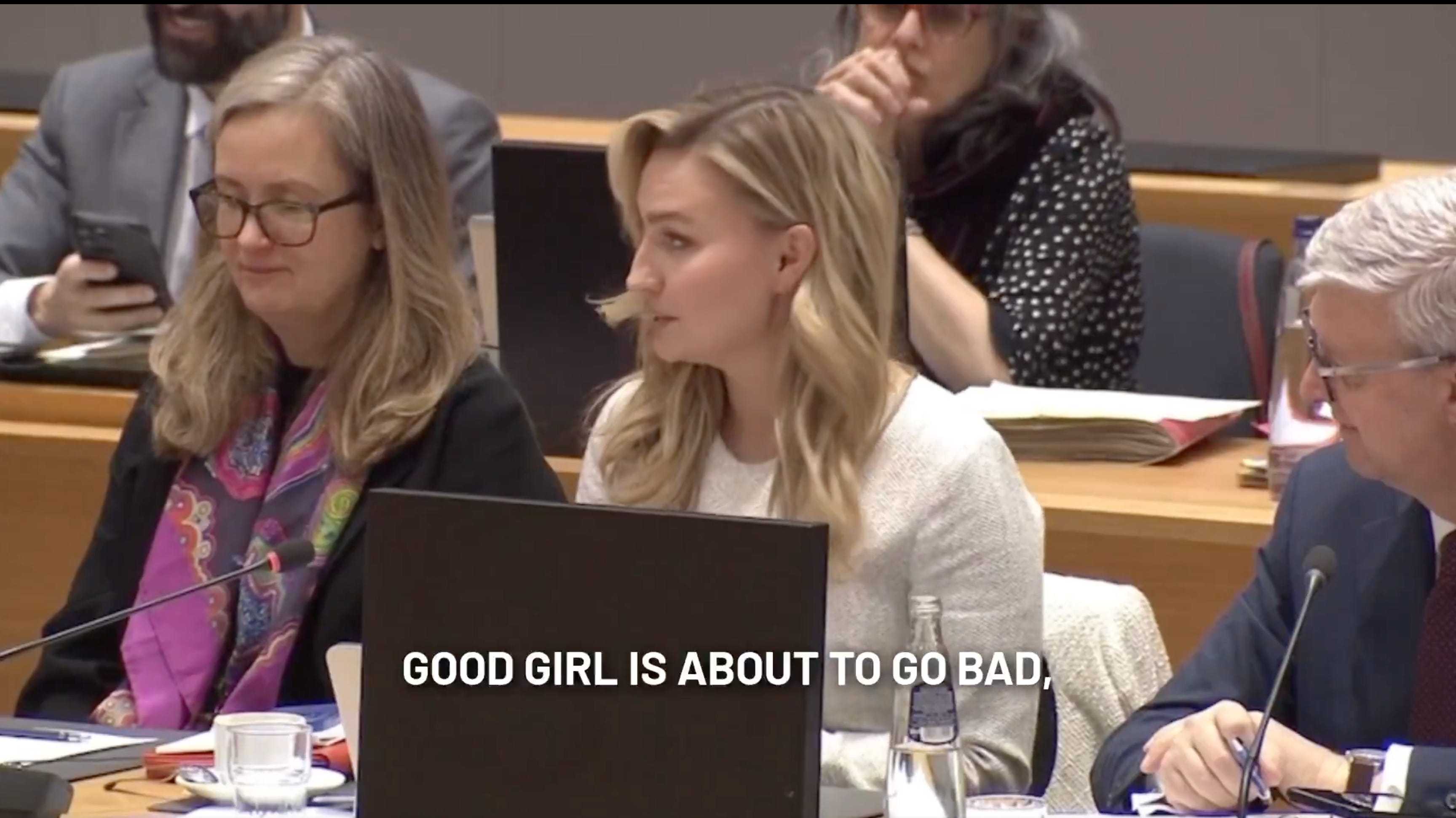
The forces that reshape the European project rarely dominate the headlines when they arrive. This week’s Energy Council meeting in Brussels was no exception. Sweden’s Deputy Prime Minister and Minister for Energy Ebba Busch issued a warning that barely registered in the press:
If the direction does not change, we are going to have to consider and reconsider Sweden’s role in the Energy Union. I don’t say this lightly. I am a warm, dedicated friend of the EU. But we will then have to investigate all viable national measures to protect Swedish citizens and companies. And this includes a moratorium for new connections to continental Europe and for renewal of existing interconnections. And we are prepared with harsher and further actions apart from that.
The trigger: the EU plans to cash in on Sweden’s grid congestion revenue—the profits created by price differences in the electricity market. Last year it amounted to €3 billion, most of it generated inside Sweden’s own grid. The Commission wants to redirect 25% of that stream toward financing cross-border infrastructure elsewhere in the EU. The message to member states: build a system that works, and Brussels will treat it as a communal asset.
Sweden’s threat might not be entirely empty. In the summer of 2024, the country cancelled the Hansa PowerBridge—a €600 million subsea cable planned to carry 700 MW between Sweden and Germany. Stockholm’s stated reason was that Germany’s electricity market exported inefficiency into Sweden. The unstated reason is one that’s been building in Swedish politics for years: Germany’s renewable grid works partly because countries like Sweden stabilize it with dispatchable power and Swedish voters are noticing the bill.
The European energy market is about to dominate Swedish politics ahead of the parliamentary election in September 2026. In the 2022 campaign, electricity prices, European market integration, and exports to Germany already emerged as a hinge of Swedish politics—particularly in southern Sweden, where continental price spikes hit household bills hardest. The proposals that came up were telling: Sweden’s Left Party called for a separate export price—the “Sweden price”—to shield Swedish consumers from continental demand.
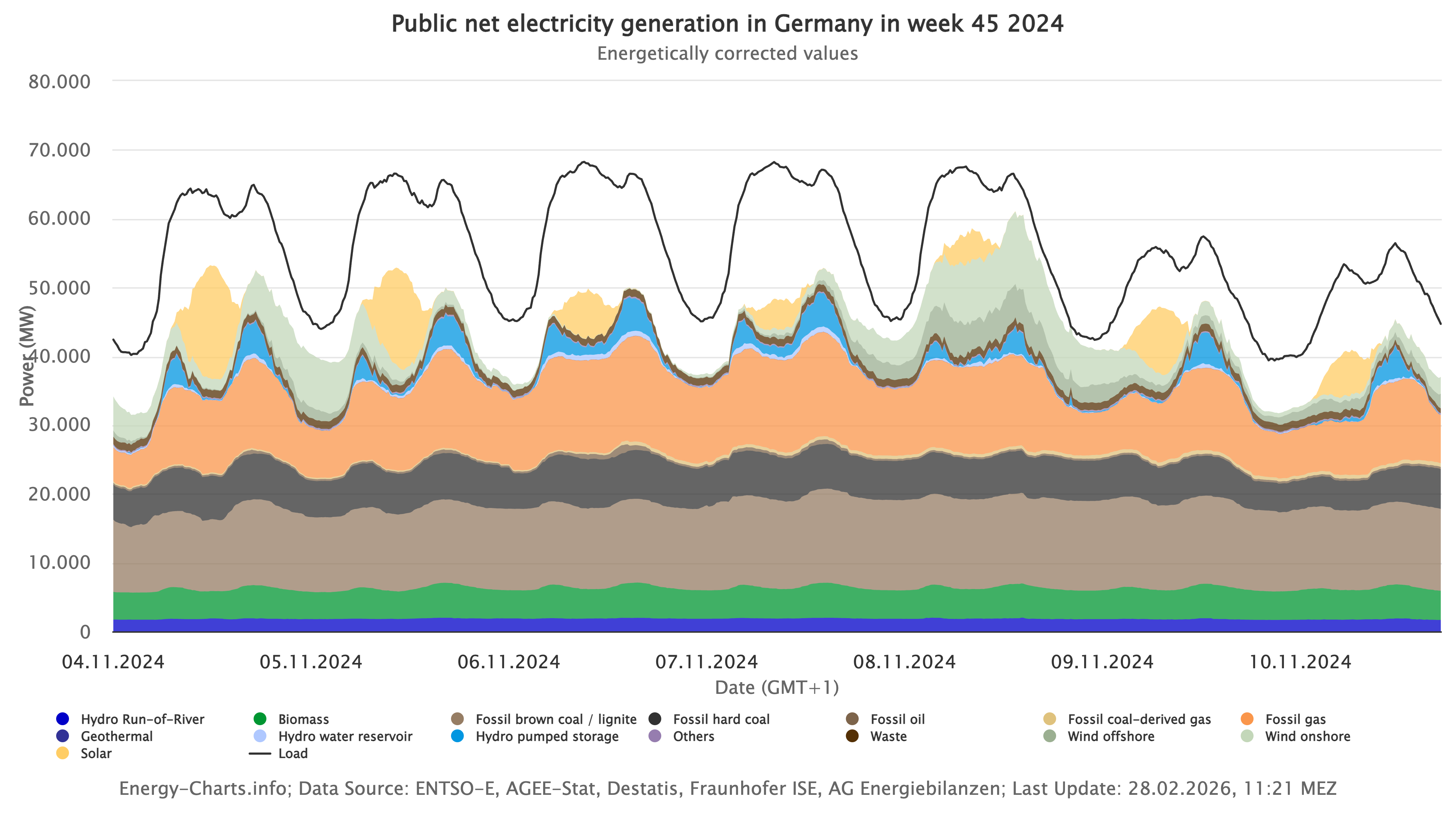
That problem got worse in late 2024. A prolonged Dunkelflaute—windless, sunless periods that are every renewable-heavy grid’s nightmare—gripped central Europe. Wind generation collapsed just as cold weather pushed demand higher. German wholesale electricity prices briefly hit more than €1,000 per megawatt-hour. Through the interconnected grid, the shock traveled north, forcing Norwegian and Swedish households to pay prices they hadn’t seen since the energy crisis that followed Russia’s attack on Ukraine. In other words, Sweden was being punished for providing a weather-independent buffer.
Busch’s warning might be dismissed as electioneering. But the Hansa PowerBridge cancellation suggests otherwise. What happens to Europe’s grid when its most reliable exporter decides the relationship no longer works? That question has a physical answer and the numbers are not reassuring.

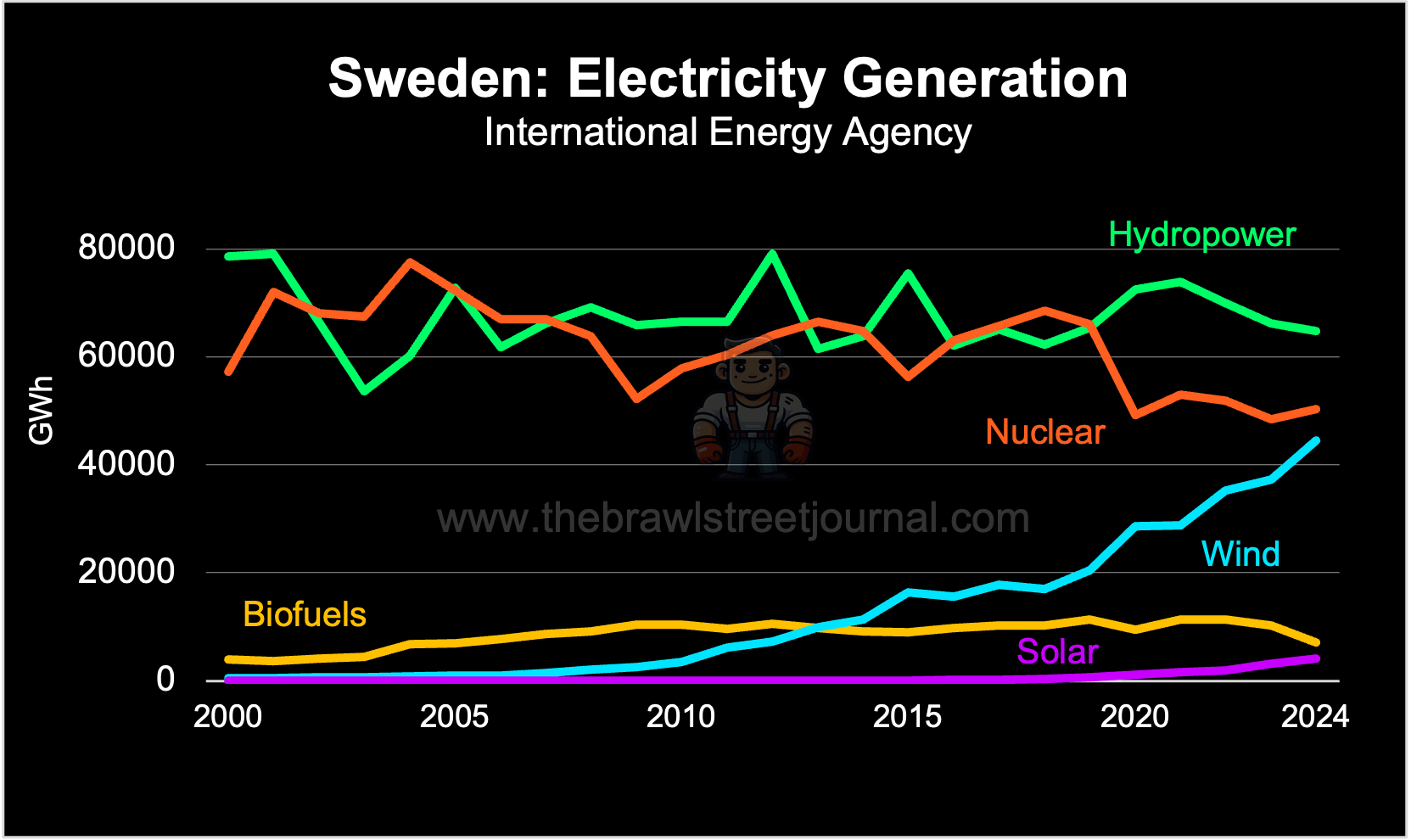
Sweden exports a larger share of its electricity than any other country in Europe—nearly one fifth of everything it generates crossed a border in 2024. This share has grown 187% since 2000, roughly ten times faster than Sweden’s own growth in electricity production over the same period, according to data from the International Energy Agency.
While other European member states have spent that same period systematically dismantling dispatchable capacity and replacing it with weather-dependent generation, two thirds of Sweden’s electricity comes from hydropower and nuclear. In a continent increasingly running on wind and sun, Sweden is one of the few places that’s operating non-fossil baseload at scale.
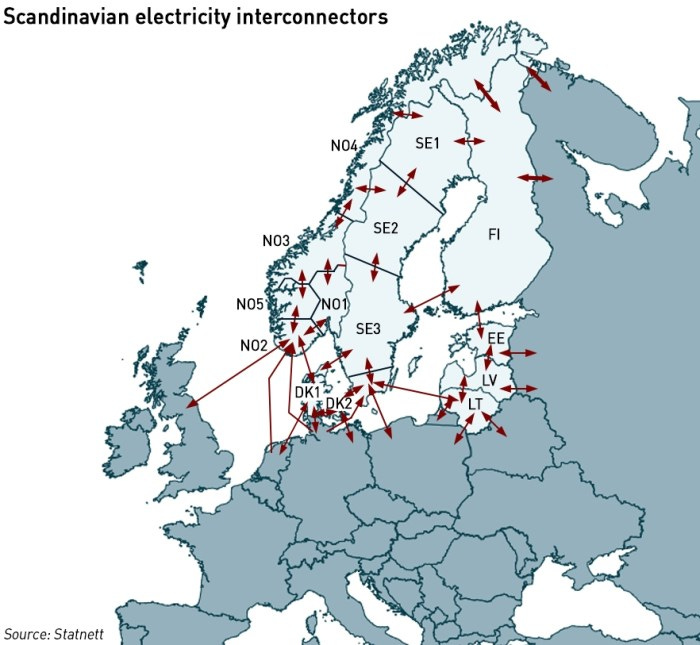
Sweden’s total direct export capacity to continental Europe—through the Baltic Cable to Germany, SwePol to Poland, NordBalt to Lithuania, and onward flows through Denmark—amounts to 3.5 to 4 GW. Now consider what Germany was asking that capacity to help cover during the 2024 Dunkelflaute. Germany has installed almost 73 GW of wind capacity, but on a normal winter day it operates at around 25-30% of that, delivering 18 to 22 GW. During the 2024 event, output collapsed. As the German economy ministry wrote:
Due to unusual doldrums, the average output of wind power at 3.1 gigawatts (GW) has been nearly 85 percent lower than the 19.2 GW usually seen during this time of the year.
In other words, less than 5% of installed capacity. That’s a 16 GW hole. Filling it drew massively from Germany’s gas reserves: in early November they stood at 98% full, by mid-December they had dropped to 85%. Coal and oil generation had to be ramped up along with whatever neighboring countries could spare.
Sweden’s 4 GW of export capacity toward continental Europe could cover around one quarter of that gap. In the highly inelastic world of electricity demand, one quarter can make the difference between a manageable crisis and emergency grid interventions. The price signals showed it. As Busch tweeted at the time:
The rollercoaster of electricity prices is horrible […] This is a result of decommissioned nuclear power. When there’s no wind, we get high electricity prices with this failed electricity system.
Sweden has repeatedly demanded that Germany internalizes the costs it has been exporting northward. The main mechanism it has pushed for is zone-splitting: dividing Germany’s single electricity bidding zone into multiple smaller zones with distinct prices reflecting local supply, demand, and grid constraints. Export-heavy northern Germany, stuffed with wind capacity, would see lower prices. Import-reliant southern Germany, home to the automotive plants and chemical facilities, would pay more. This would accurately reflect the scarcity of their location.
Unsurprisingly, Germany has refused to comply with that request. Expanding wind and solar while dismantling nuclear has not delivered cheap energy. The opposite is the case. German industrial electricity prices are among the highest in the developed world, a slow-motion catastrophe for a manufacturing economy that built its competitiveness on energy-intensive production. Zone-splitting, in that context, is not a technical market reform, it’s a political grenade. Bavaria’s Minister-President Markus Söder pushed back: “Our country must not be divided.” A slightly silly way of saying: our industrial base is already bleeding, don’t ask it to pay even more.
As Swedish households effectively subsidize the suppressed energy costs of German industry, Stockholm’s pushback is equally understandable. Sweden divided its grid into four pricing zones to reflect its own internal bottlenecks. It invested in infrastructure that works. And it is being asked to expand the cables connecting it to a market that refuses to fix itself. Of course, Sweden isn't purely a victim of this arrangement given its electricity export revenues in the amount of €1.5 billion in 2024.
But acknowledging this doesn't resolve the core problem: the cost of running a continent on intermittent energy has to land somewhere. Germany is ensuring it doesn’t land on Bavaria. Stockholm has decided it won’t land on Sweden either. Two countries, both acting rationally, both trapped by the same broken system. The Commission’s proposal to redirect congestion revenues, under the circumstances, is not only politically tone-deaf. It actively discourages countries from providing system stability going forward.
Sweden’s interconnectors are a potent instrument of coercion in this context. Threatening curtailment, blocking new capacity, making zone-splitting a non-negotiable condition for cooperation—each of those moves inflicts direct pain on German industry, which is already struggling to survive the consequences of the country’s poor energy choices.
As Germany is unlikely to give way, Sweden’s September election will push any government to shield consumers from continental prices. The consequence is physical: the next time a Dunkelflaute hits central Europe, the buffer is smaller. A smaller buffer pushes the adjustment elsewhere: more gas burn, faster storage drawdowns, and a sharper scramble for spot LNG cargoes in a market already tightened by disruptions in the Strait of Hormuz.
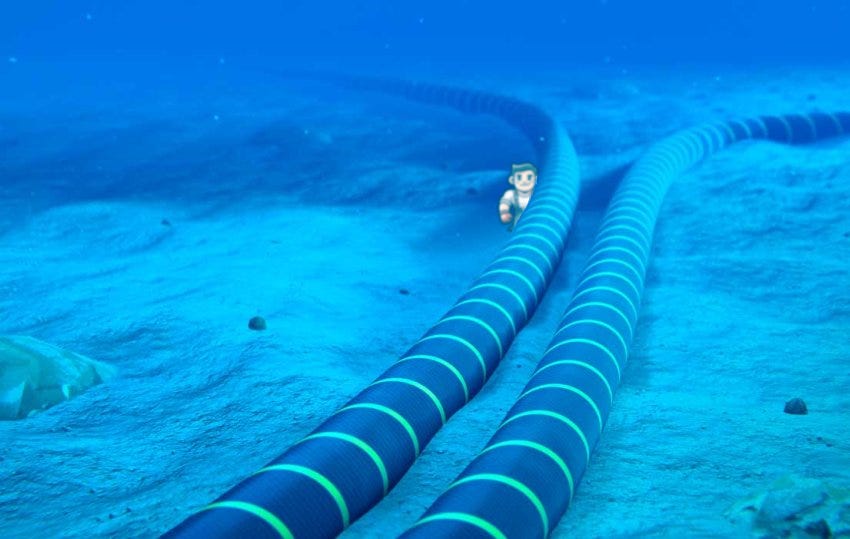
The decisive fissure points are rarely where anyone is looking. Right now they run along the cables under the Baltic Sea.
Share this article with anyone who thinks Europe’s energy crisis stops at gas!
📨 People in boardrooms, energy desks, and hedge funds keep forwarding this. Stop getting it late — subscribe now!
Already subscribed? Thanks for helping make BSJ quietly viral.
Nut zero (not my term but brilliant in my view) is dying. reality is a tough taskmaster and all of these problems are reaching a point where the people in every nation in Europe are going to rise and say, no more. end net zero, we need energy and we don't care about climate change. after all, climate change has always been a true luxury belief.
As suggested in the article the same is true of Norway.
A national front government in France would bring matters to a head. The French electricity customers are becoming aware of the cost of support for their neighbours is growing.