
Facts on the Ground
When will Ukraine hit Russian LNG?
Ukraine’s “firm commitment to the rule of law” does not stop it from violating the general protection of civilian objects under Article 52 of the First Additional Protocol to the Geneva Conventions. On Wednesday, Ukraine said it had struck 116 vessels in the Sea of Azov during a nine-day campaign, in what appears to be the most sustained effort yet to disrupt Russia’s maritime logistics and export trade.
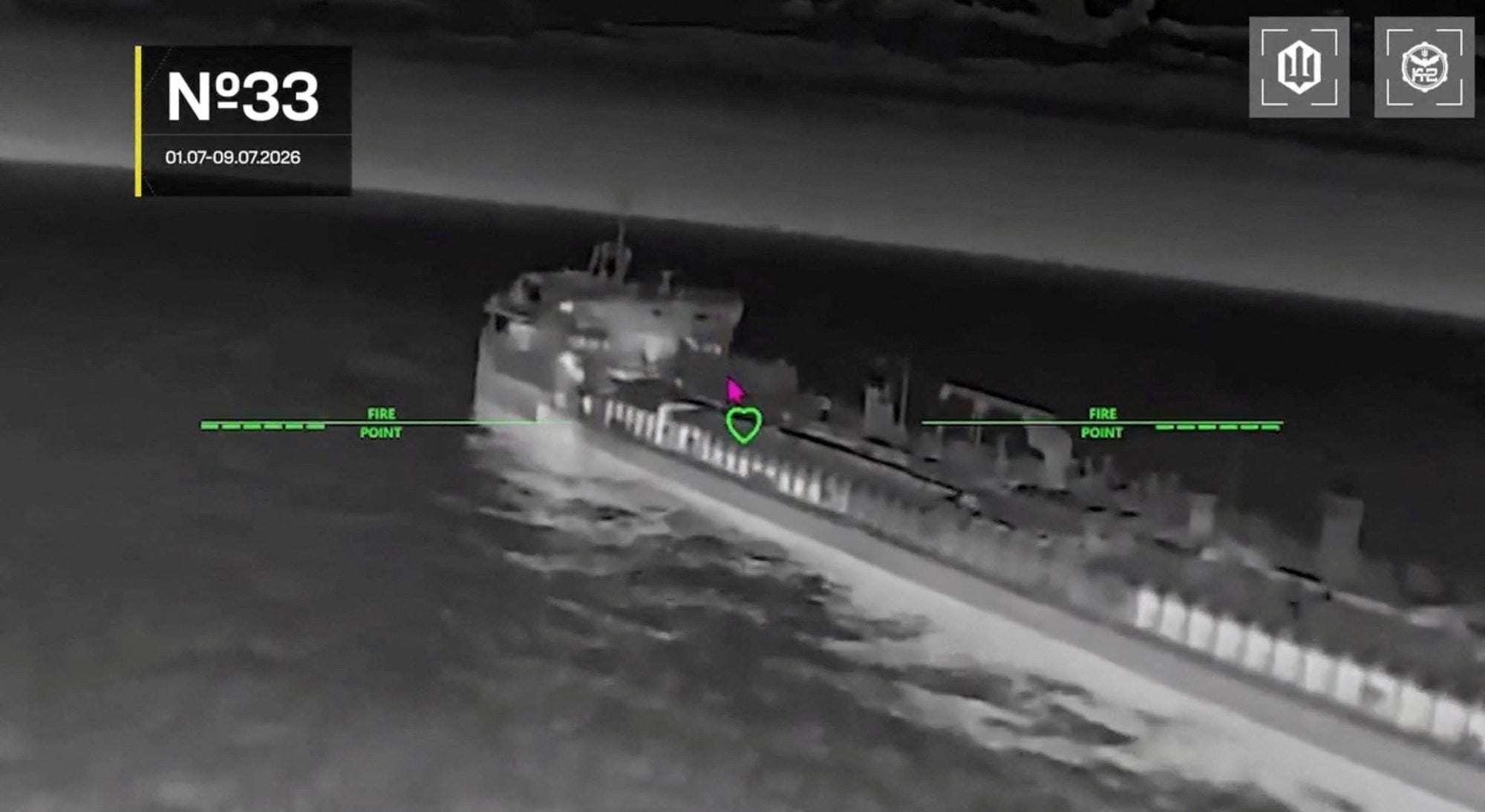
The Protocol limits attacks strictly to military objectives: objects that by their “nature, location, purpose or use make an effective contribution to military action” and whose destruction offers “a definite military advantage.” The mere claim that Russia fills its war chest with trade therefore rests on shaky ground as a justification for attacks on civilian cargo. International Maritime Organization (IMO) Secretary-General Arsenio Dominguez condemned the strikes against merchant shipping:
Such acts endanger seafarers, threaten the safety of navigation, disrupt global supply chains and undermine the principles upon which international shipping depends. […] Seafarers should never become casualties of conflicts to which they are not a party.
In light of Europe’s support of Ukraine’s personnel, the responsible individuals are unlikely ever to fear prosecution. In essence, international law remains relevant when it bolsters your position, while breaching it isn’t much of a problem when you can safely assume no consequences will follow. What Ukraine spares is bounded not by any legal considerations but by military feasibility, or considerations of another kind.
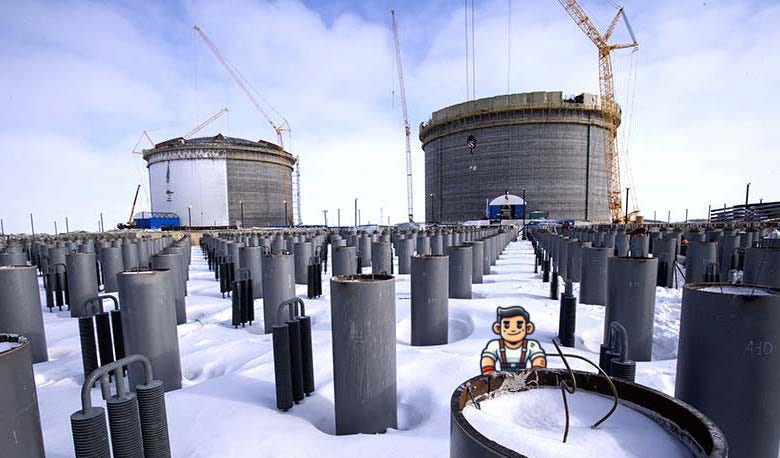
Unlike the energy infrastructure deep inside Russia that Ukraine has attacked—refineries, pumping stations, fuel depots—Russia’s LNG export terminals stand untouched. The most important of them is Yamal LNG. Located in the Russian Arctic, it accounts for about 60% of Russia’s LNG exports, and with the pipeline routes to Europe largely gone, it has become the cornerstone of Moscow’s gas-export economy.
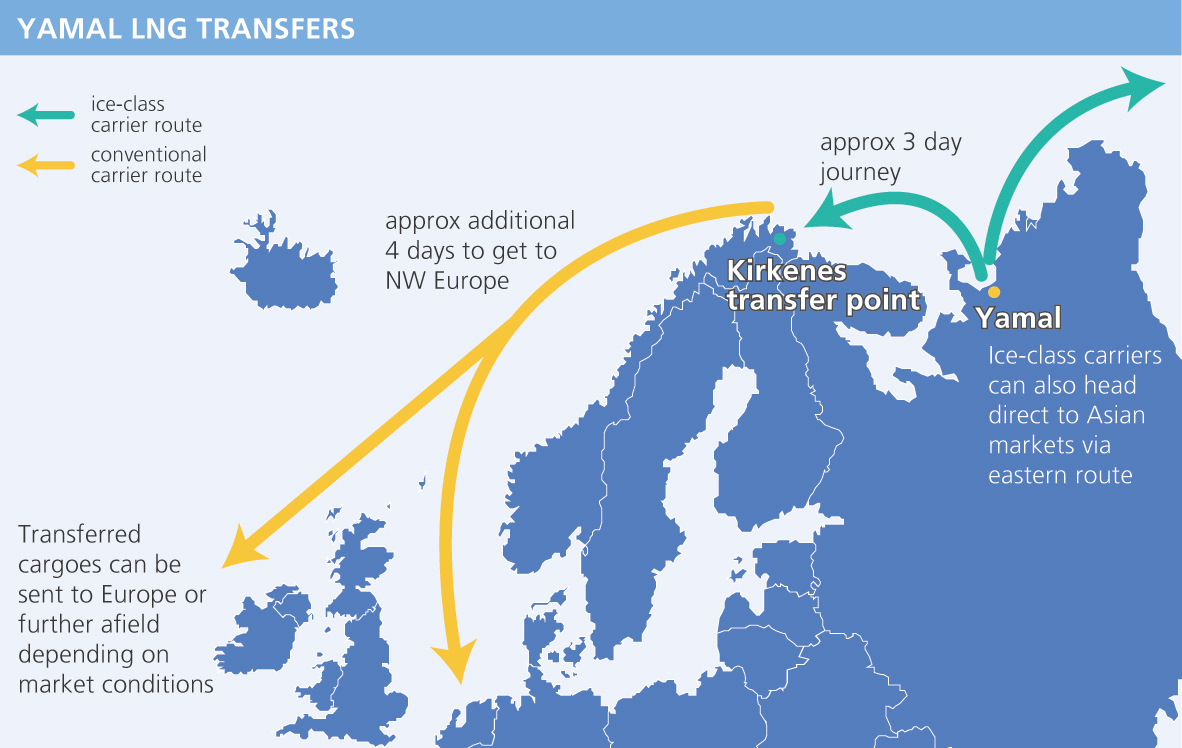
Given Yamal’s distance from Ukraine’s border, striking it is difficult, and Russia has undoubtedly prepared to fend off attacks. But it is not out of the question that Ukraine could damage Yamal, whether by missiles or by drones traveling via the Baltic states or smuggled into Russia and launched near the target—an approach Ukraine’s Security Service (SBU) appears to be developing into an operational method. Time to ask when we should expect Ukraine to try to hit Yamal, and what a successful strike would do to Europe’s gas market.

Yamal’s significance to Europe’s gas market was once again stressed by the Financial Times this week:
Europe imported more liquefied natural gas from Russia’s leading LNG project than ever before in the first half of 2026, absorbing nearly all of the Siberian facility’s output months before an EU ban on Russian gas imports comes into effect.
EU purchases from Yamal LNG, which Russia’s privately owned Novatek controls, reached a record 9.89mn tonnes in the first six months of the year — 18 per cent more than in the same period last year, according to data from analytics company Kpler.
On an annualized basis and converted into billion cubic meters (bcm), that’s 27 bcm or about 8% of the EU’s entire gas consumption in 2025. Ukraine has made clear it will strike the energy assets that fund Russia's war, yet that ongoing commercial dependency can plausibly explain why it has spared Yamal thus far—all the more since Ukraine itself is entirely reliant on European support to keep fighting. Past strikes on energy infrastructure suggest a pattern for when that restraint might end:
Nord Stream is the first data point. Gas flowed through it into the summer of 2022, and seven months into the war the pipeline still sat untouched. The commerce ended before the pipe did: Gazprom cut flows to zero in early September, citing maintenance and equipment leaks, while Germany had already resolved in March to phase out Russian gas by mid-2024. Weeks after the last gas stopped moving, on September 26, the pipes ruptured on the Baltic seabed. The sabotage created a fact that made reversing that phase-out significantly harder.
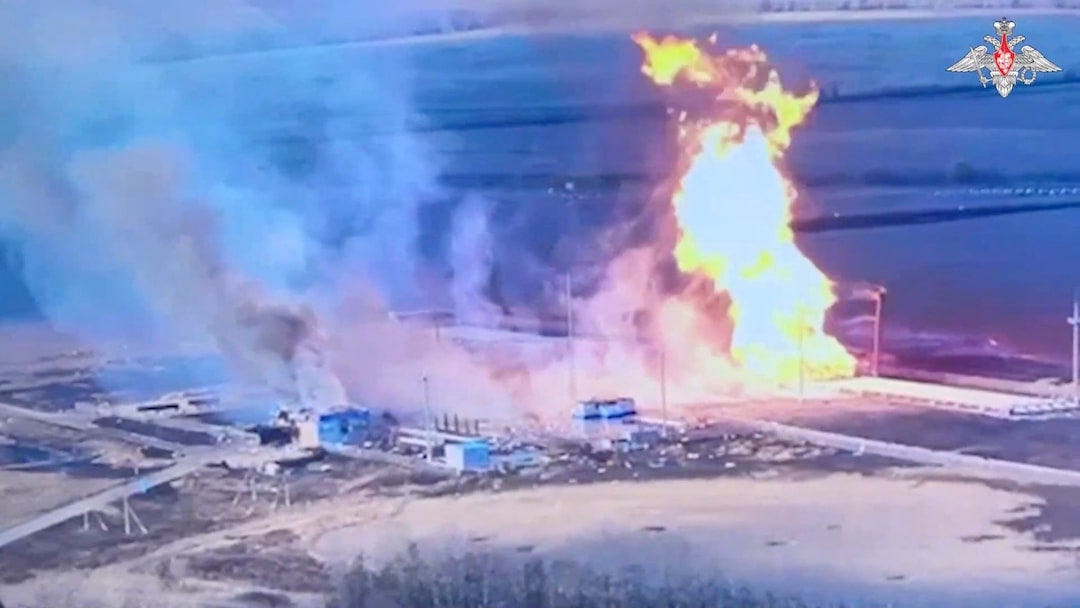
The second data point establishes the same logic from the opposite direction. For years Russian gas flowed west across Ukraine through the Urengoy–Pomary–Uzhhorod line under a transit contract, and Ukraine collected the fees while Russia shelled the country the pipe crossed. Neither side touched it. During its 2024 incursion into Kursk, Ukraine even held the ground around the Sudzha metering station, and still the gas flowed and the station stood. The contract shielded it from the army at it. Then the contract expired on January 1, 2025, Ukraine declined to renew, and about twelve weeks later Sudzha was ablaze. Russia blamed Ukraine, Ukraine blamed Russia. The facility survived three years of war and an occupation, but got destroyed three months without a contract.
Two cases, one rule: commerce is the shield. These assets stay safe while the trade runs and are struck once it stops. Applied to Yamal, what follows is this: From 1 January 2027 the EU bans long-term imports of Russian LNG, and Yamal’s European trade ends by law. This, by the pattern and within the weeks to months the earlier cases took, makes a strike consistent with the pattern from that date onward.
The shield need not fall cleanly, though. Some member states will likely want to keep the Russian-LNG business alive, and dangerously low storage into a cold winter would sharpen the incentive. Greece has already blocked the EU’s latest sanctions package to protect such an interest:
[Greek shipping company] Dynagas has transported more than 10mn tonnes of Russian LNG since the start of 2025 on 11 vessels, according to FT calculations using data from Kpler, a data and analytics company. The FT identified 11 Dynagas ships that completed 144 voyages in that time. Its fleet of Arc7 ships has been specifically built to serve Yamal, which sits on Russia’s north coast in the Arctic Circle. Greece argued that Dynagas would not be able to use the vessels elsewhere and would be forced to sell the vessels to non-western actors, according to those briefed on the discussions. The highly specialised ships are among the most complex to build and cost about $300mn.
There is a precedent for what happens to the energy autonomy of member states that obstruct the coalition. Hungary and Slovakia buy Russian oil through the Druzhba pipeline under an EU sanctions exemption, and both blocked aid to Ukraine and the sanctions the rest of the bloc wanted. It did not protect the pipeline. Ukraine struck Druzhba-related oil infrastructure repeatedly through the second half of 2025, halting flows, then struck the Kaleykino pumping station twelve hundred kilometers inside Russia in February 2026. Budapest and Bratislava demanded it stop. Slovakia cut diesel exports and threatened to cut electricity supplies in retaliation. The strikes continued.
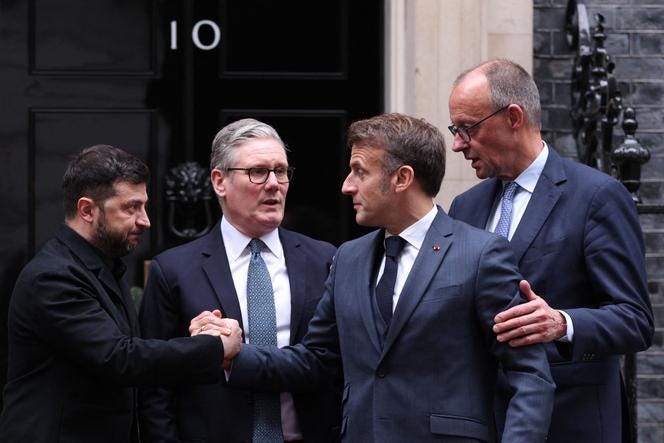
So much for the exemption. Hungary and Slovakia had the oil contract, the veto, and the nerve to cut Ukraine's diesel and power in protest. Kyiv hit the pipeline anyway. The Druzhba episode suggests that Ukraine only cares about the room where the weapons are decided: while Paris and Berlin hold the line, a Greek veto is noise, and the plant is fair game the day European contracts expire.
That settles the when. What a strike would cost is the other half of the question. Even if the Russian energy phase-out holds, taking Yamal offline will not shield Europe from the consequences. Europe would be right in the strike's economic blast radius. Yamal cargoes move Europe's TTF benchmark regardless of a ban, because Europe competes for the same global pool they feed. Remove the volume—around 8% of EU demand—and the supply curve shifts. The price the whole market pays rises.
It's the same mechanism that took TTF from below €20/MWh in the years before the war to above €300 at its 2022 peak and close to €60/MWh this week, even though most of the Russian pipeline gas that vanished was sold off-hub. Physical supply sets the level and the contract type doesn't change that. The obvious objection is the coming LNG glut. But it comes late, and the ban's first winter falls ahead of it. Montel cites analysts warning EU prices could double on a cold snap into low storage. Add a Yamal strike to that winter, and doubling becomes the floor.
The logic of striking Yamal is compelling for Ukraine and for every European politician determined to make Russia a forever-enemy: unlike a ban that can reverse when leadership changes, the destruction of liquefaction trains is hard to undo. A new government in Berlin or Paris that wanted to resume normal relations would face the difficult task of convincing Russia to rebuild for Europe. Those shaping today's events understand the normative power of facts, however loud their professed commitment to the rule of law.
Share this article with anyone who thinks Yamal is safe!
📨 People in boardrooms, energy desks, and hedge funds keep forwarding this. Stop getting it late — subscribe now!
It's painfully funny what "consensus" and "common European policy" mean in Brussels. Is it whatever Paris & Berlin (deep states) want, so Greek and Hungarian vetos "hold the EU hostage"? Or is it whatever NATO wants, which explains London's involvement, where the EU is a consensus enforcement mechanism (against objecting countries and democratic processes across the board). Protecting "our democratic institutions" from the inconveniences of the popular will, to paraphrase Ursula.
"Ukraine" has already attacked a Russian LNG ship in the Mediterranean Sea. Strangely, the enablers do not think that this will come back to them. As if they have a back-up planet to escape to.