
Ration Book
Europe starts deciding who gets electricity first.
Arbitrage generally benefits consumers, since it closes the price gap and irons out the inefficiency behind it. Wind and solar generation make that gap unusually wide: oversupply pushes European power prices negative for hundreds of hours a year, almost 600 in 2025 alone. This effect explains projects like the biggest battery storage plant now being built in Germany. The first section of this plant in Förderstedt, Saxony-Anhalt, is now complete. Once finished, it will have 300 MW of capacity and 716 MWh of storage.
Coverage of the project reaches for the usual “energy system of the future” platitudes and “underscores its nationwide significance.” But amid the euphoric language, the press release does the sobering math for you: output could supply up to 500,000 households with electricity for around two hours. Germany has about 41 million households. Two hours of power for 500,000 of them is 1.2% of the country, for a fraction of one evening.
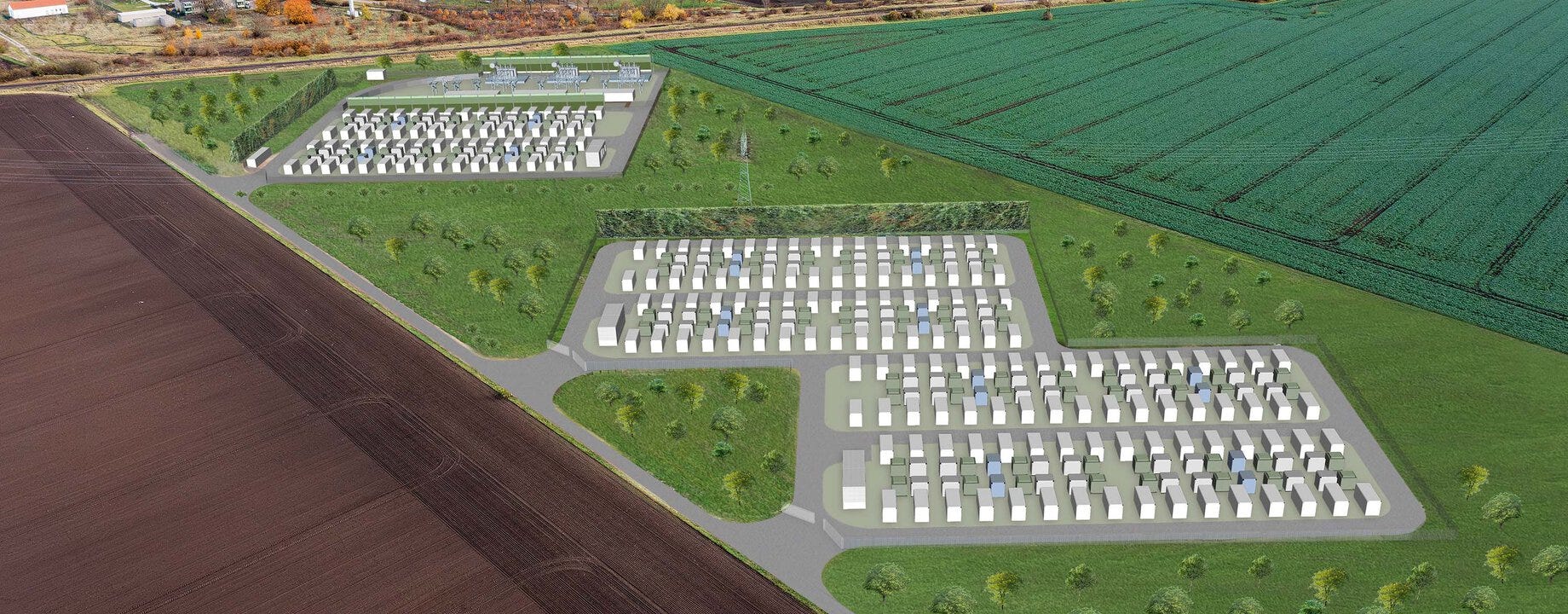
Nevertheless, the upside is real for the operator as energy prices last week demonstrated: a battery storage project could buy power for 0 cents per kWh during the day and sell it for 25 cents at night. At its full 716 MWh capacity, that’s €180,000 in revenue in a single day.
Of course, that arbitrage opportunity only exists because ratepayers and taxpayers subsidized volatile overcapacity for a quarter of a century. Any benefit from negative prices is now pocketed by private companies such as EcoStor, the plant's owner—a classic case of socializing the cost and privatizing the profit. With battery storage exempt from paying grid fees for the next 20 years—a cost that everyone else who draws power from the grid has to pay—the business case for the plant obviously penciled out.
This gold rush is unlikely to last forever, though. THEMA Consulting Group, not exactly anti-renewables, modeled what Germany’s battery boom does to the industry’s returns. At 47 GW—the industry’s central case for 2030—a two-hour battery earns about €50,000 per megawatt a year.
Scaled to Förderstedt’s capacity, that’s €15 million a year against a €250 million investment: a 6% revenue yield before running costs. Push capacity to 150 GW—full parity with the envisioned solar buildout—and revenue falls to €12,000 per megawatt. For Förderstedt, that’s just €3.6 million a year, nowhere near enough to justify the investment.
Eventually, the arbitrage opportunity cannibalizes itself, and the problem with volatile electricity generation remains. Regulators haven't missed this. In the last few weeks, three separate tools for managing the problem surfaced in Germany and the UK. None of them make more electricity. All of them decide who goes without it first. Time to see exactly who that turns out to be.

Start in Great Britain. Along with Germany, it's one of the most fervent pursuers of net zero in Europe, despite its energy potential in the North Sea. If you refuse to dial up the input side of the equation, there's only the output side left to control. In a remarkable push towards interventionism, the British government therefore seeks to control how much electricity people use in their homes:
Heat pump households face winter warmth rationing as the drive to net zero raises increasing fears of blackouts.
By the end of next year, electricity suppliers will be able to remotely turn down heat pump central heating to help Britain’s energy system cope with high demand.
Suppliers are expected to do so on the instructions of the quango responsible for coordinating the grid, which is overseen by Ed Miliband’s Department for Energy Security and Net Zero (DESNZ).
Britain’s electricity supply typically comes under most strain during winter cold snaps. The risk of blackouts is expected to become more extreme as net zero policies shift energy demand from gas to electricity and supply becomes more dependent on less reliable wind and solar generation.
One would assume that this strain on the grid would lead the government to slow down the heat pump rollout, but far from it. The government wants to go from 223,000 heat pumps installed in total to 450,000 installed every year by 2030. Since last year, every heat pump must be capable of being connected to the internet. How else could the government turn off your heat when the wind stops blowing on a cold winter day?
Under the proposal, only heat pump households that agree to join the scheme will be included. In return, they will be offered discount tariffs. However, that’s economically the same as saying: if you don’t adhere, you’ll be punished. Since freezing for net zero is almost certainly vital for the grid’s stability, it’s likely the penalty will be high enough to push the median British household into compliance.
Rationing on an industrial scale is planned on the other side of the Channel. Klaus Müller runs the Federal Network Agency, Germany’s energy regulator. He is a former Green Party politician who is now in charge of deciding, if the power gets tight, who keeps theirs and who doesn’t.

As leaked documents revealed last week, his agency has spent at least two years building a new tool to make that decision. The system is called “security platform electricity”—a central command structure for throttling electricity use during a crisis. If a company doesn’t comply, the agency can have its power physically cut.
Any company using at least 8 GWh of electricity a year—chemicals, metals, paper, food processing—must register with the platform. When a shortage looks close, registered companies report their forecast usage. If it turns serious, they get at least 24 hours’ notice to reduce consumption. The companies ordered to shut down get no compensation, since a production ban isn't expropriation, at least according to the legal opinion the agency holds.
None of this was made public until the leak. Asked by a grid operator why the plans had been kept quiet, the agency answered it wanted to avoid public “unease” over such a sensitive topic.
Reducing consumption only works on companies that already have a connection to throttle. Getting one in the first place is another kind of rationing. In Hamburg, electricity connections are now in short supply: the volume of requests for new connections already exceeds the city’s entire current peak demand. Those affected are mainly data centers, battery storage, and power-to-heat systems for district heating.
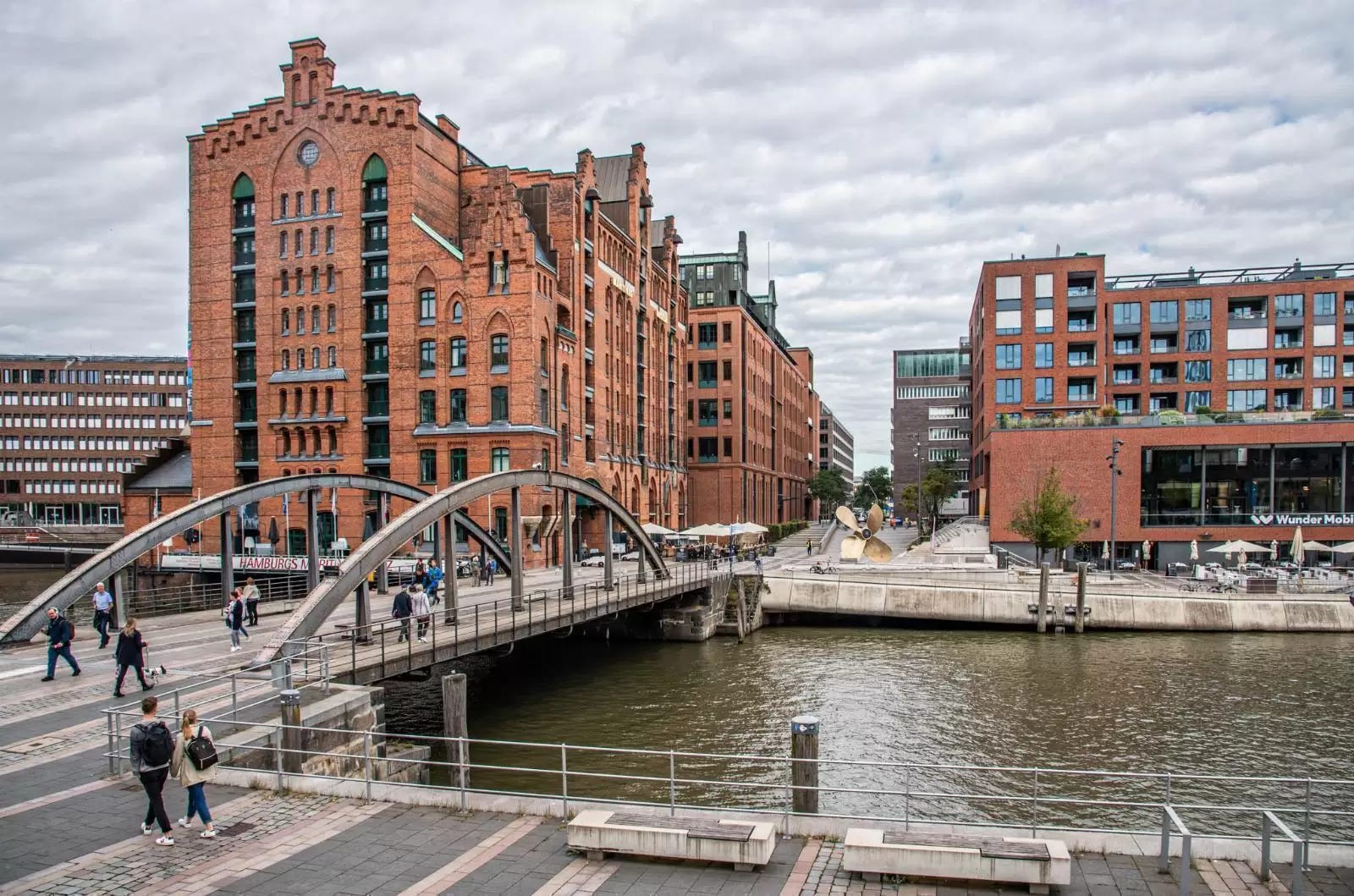
The city is now working on a new system to allocate connections above a capacity of 1.5 megavolt-amperes. Bremen and Berlin have similar issues. In Frankfurt, one of Europe’s most important data center hubs, the local grid operator explicitly prioritizes connection requests according to a political wish list: heat pumps and private charging stations come first, then projects relevant to greenhouse gas neutrality.
Economic prosperity doesn’t happen where investors can hardly get a grid connection—and if they can, they risk running into rationing. Reversing course, signaling that this experiment has failed, is always possible. The problem is that you need to admit that you were wrong all along. The unwillingness to do so might explain why talks between OpenAI and the German government last year—only made public in July—went the way they did.
A state-of-the-art OpenAI data center on German soil would have spectacularly pushed the country forward internationally as a location for artificial intelligence. But there was one caveat: OpenAI wanted to pick a location near the French border to directly tap into French nuclear power.
The negotiations failed, with a senior civil servant claiming that OpenAI made pie-in-the-sky promises and then backed down. Since details didn't become public, we may never find out who is to blame. But there’s a plausible explanation for why the talks collapsed: Berlin didn’t want OpenAI to demonstrate the failure of its energy transition by skipping the German grid.
Instead, the country prefers a policy of rationing—a sign of regression. This crop of leaders seems to have forgotten that Europe relied on wind power for centuries. Then the steam engine lifted us out of that poverty.
Share this with the last person who admitted they were wrong!

📨 People in boardrooms, energy desks, and hedge funds keep forwarding this. Stop getting it late — subscribe now!
Happening more and more in the Netherlands too, with thousands of businesses waiting to get on the grid, even with a de facto 'connection ban' in the province of Utrecht. At the same time, the Dutch government is increasingly 'warning' its citizens that (consumption of) energy, water and other basic necessities are not 'a given' any longer. A kind of degrowth fantasy is being presented to citizens as if it's a good thing.
Guaranteed the quango crew aren’t going to be cold this winter. Freeze your balls off for thee, but not for me.