
The New Air Order
Sanctions Shatter Western Aviation’s Edge
When Russia attacked Ukraine in early 2022, aviation was among the first targets of the West’s shock-and-awe campaign. As part of their “hellish sanctions,” Brussels and Washington imposed a blanket ban on Russian aircraft entering Western airspace. Almost overnight, Aeroflot vanished from Europe’s skies: routes were severed and leasing contracts torn up.
Unsurprisingly, that decision backfired immediately as Moscow retaliated in kind. It closed its own airspace to all airlines from “unfriendly” nations: the EU, the U.S., the G7, and their allies. As a result, the world’s largest country—a landmass bigger than the U.S. and Canada combined, stretching across eleven time zones—became an impassable wall for Western carriers. What had been the most direct corridor between Europe and Asia remains off-limits to this day.
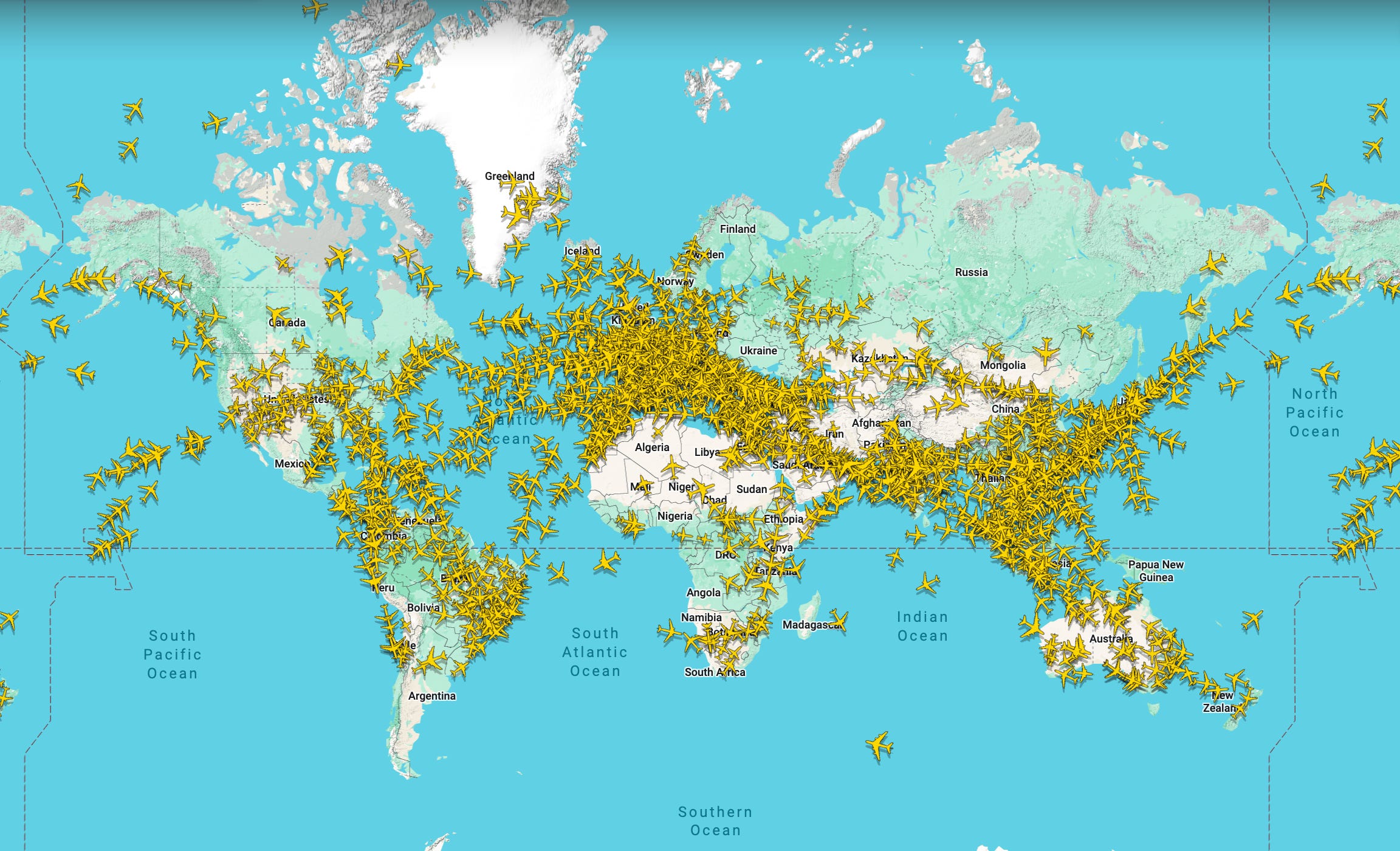
For European carriers that corridor used to be gold. Routes from Europe to Asia were the backbone of their long-haul business: high-margin seats filled with executives and cargo holds stuffed with electronics. Those routes now require detours of several thousand kilometers and add hours to each flight.
For example, Finnair’s previous flight duration from Helsinki to Shanghai was less than nine hours. Due to the need to avoid Russian airspace, the current flight time has increased to as much as 14 hours. The additional cost can run into six figures per flight. For a wide-body jet like a Boeing 777, each hour of extra flight time means nearly €30,000 in additional expense.
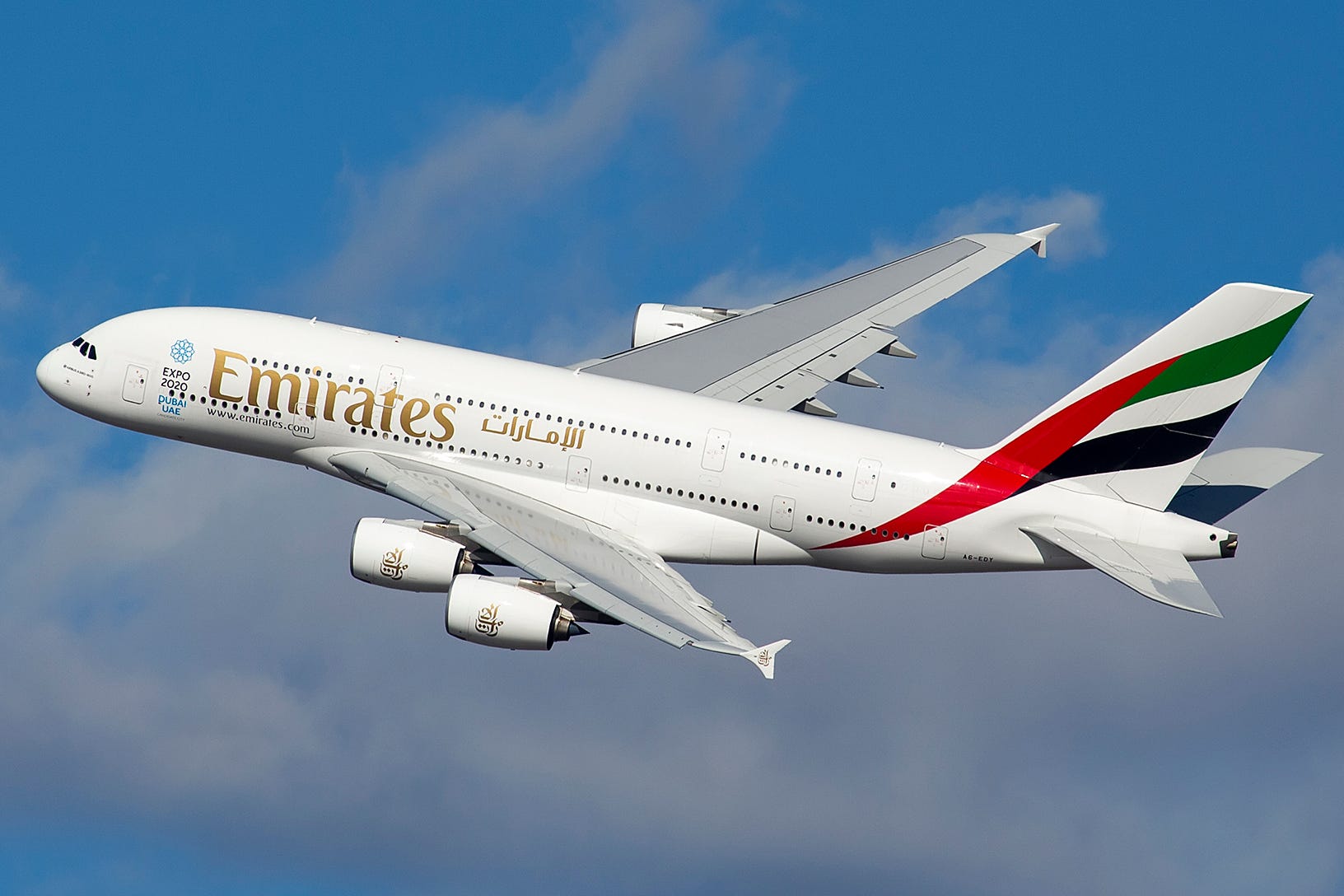
Meanwhile, other carriers seized this opportunity. At the end of last year, Emirates announced that demand for flights to China had grown so sharply it would begin deploying its flagship A380 on routes to Beijing, Guangzhou, and Shanghai, boosting capacity by up to 40%. The exact opposite is happening with Europe: Lufthansa, British Airways, KLM, and Virgin Atlantic have all been forced to cut or suspend flights to China entirely.
Last year, Lufthansa’s CEO Carsten Spohr expressed hope Russia’s airspace might reopen before 2030. As the war in Ukraine continues to unfold quite differently than EU leaders had hoped, it’s likely that any settlement reached once the fighting ends will only harden the lines. Brussels could choose to keep ties with Moscow severed. Spohr’s timeline, therefore, looks increasingly uncertain.
But the consequences of this fallout go far beyond the balance sheets of Europe’s airlines. It has set in motion a development that could fundamentally reshape international trade and global mobility in the years to come. Let’s head to Moscow to find out why.
👀 Reading this from a forwarded email? Subscribe to The Brawl Street Journal to get it straight from the source…
In the northwestern suburbs of Moscow, manufacturer Sukhoi is assembling the future of Russian aviation. Once a peripheral brand in the shadow of Airbus and Boeing, the company has become the spearhead of Russia’s post-sanctions industrial strategy. Its latest model, the SJ-100, looks similar to its Western rivals but inside, every bolt, flap, and circuit shows how sanctions have rewritten its DNA.
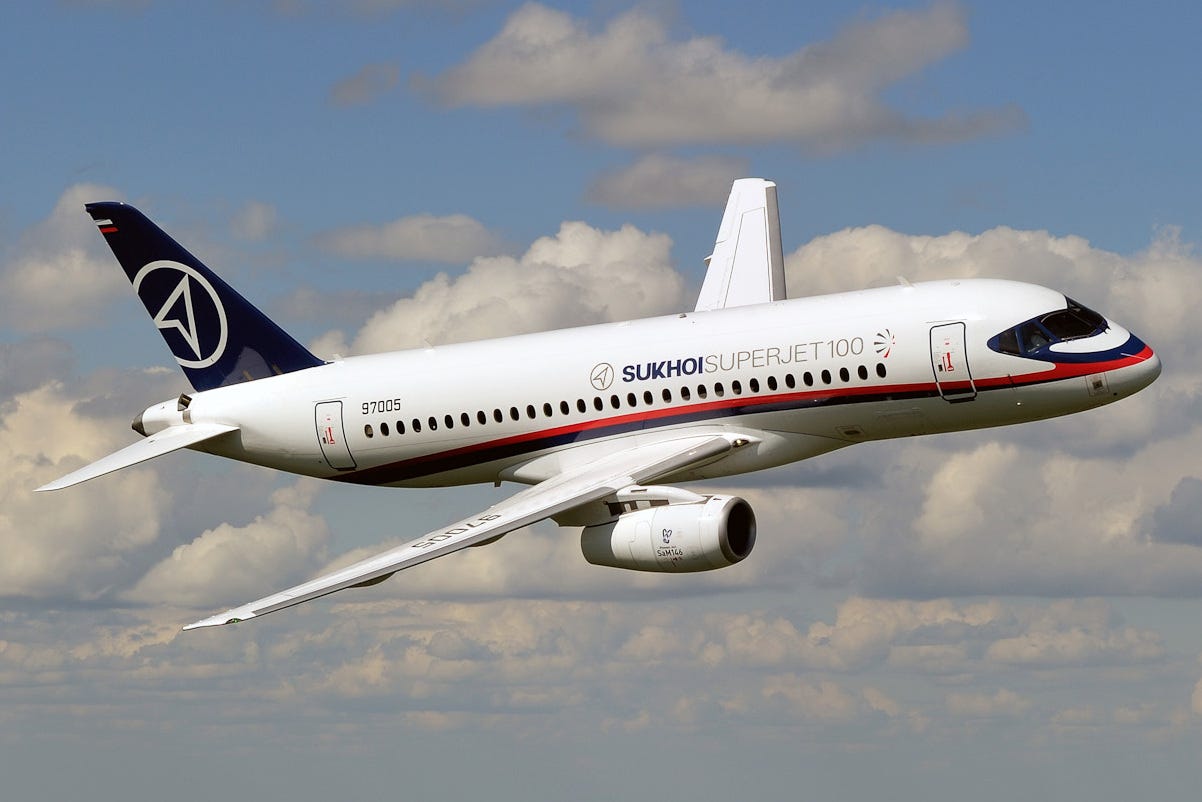
The original Sukhoi Superjet was born in the 2000s with Western help: French engines, Italian design. When sanctions cut off that supply chain, the jet’s production should have collapsed. Instead, engineers at Sukhoi spent the past three years redesigning the aircraft—replacing around 40 foreign-supplied systems, including the engines—to create the first fully “sanction-proof” airliner Russia has ever built.
But this isn’t only about Russia. The United Aircraft Corporation (UAC)—Russia’s state-owned aerospace conglomerate that oversees everything from Sukhoi to Tupolev—has begun looking outward. On October 28, UAC signed a memorandum with India’s state-owned Hindustan Aeronautics (HAL) to jointly produce the SJ-100 for the Indian market.
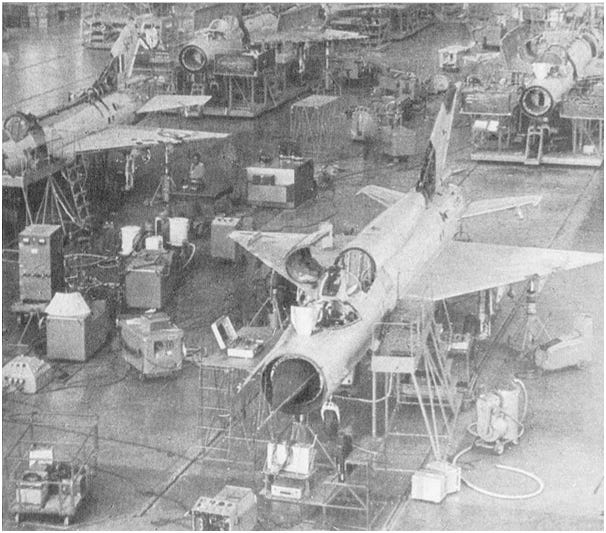
Russia and India have a six-decade history of co-producing complex aerospace systems: the MiG-21 assembly lines of the 1960s, the Su-30MKI program in the 2000s, and the BrahMos cruise missile partnership that continues today. What’s new is the domain. This time the cooperation isn’t military, it’s civil aviation, a sector long dominated by Western technology, certification, and financing.
Under the deal, HAL will assemble the SJ-100 in India, using Russian designs and Indian manufacturing capacity. Moscow gets a vast export outlet at a time when Western markets are closed and Delhi gets access to technology it has long sought to develop a domestic passenger jet industry. Nevertheless, on its own, this jet won’t upend Airbus or Boeing, neither in the next few years, nor in their core markets.
It carries only around 100 passengers, and earlier operators in Armenia, Mexico, and Ireland retired it after running into technical faults and insufficient support. Critics also point out (correctly) that certification alone will take years. But writing off Russia’s engineering capacity has been a recurring Western mistake. Analysts once argued that hypersonic systems were far beyond Russia’s reach. And yet the Kinzhal is a functioning hypersonic weapon, a class of technology the U.S. is still struggling to field.
The real significance, however, lies not in the aircraft, but in the structural shift behind it. The SJ-100 could turn out to be a major test case for a world in which the global aircraft certification regime no longer revolves solely around Washington and Brussels.
For decades, two regulators set the rules of the global sky: the FAA in the U.S. and EASA in Europe. If a plane passed their standards, it could fly almost anywhere. Russia and China always sought Western validation when exporting civil aircraft. But Western sanctions have now shattered that arrangement.

EASA suspended cooperation with Rosaviatsia, the civil aviation authority of the Russian Federation. As a result, Russian airlines lost access to Western safety updates and service bulletins. Moscow responded by unilaterally certifying Western-built jets for domestic use, a break with the previous system.
This is where the long-term consequences set in. As BRICS economies expand and assert themselves, one question becomes obvious: why should Western regulators remain the sole gatekeepers of airworthiness? If a BRICS country decides it trusts a Russian-certified jet, it may validate it without involving the FAA or EASA at all. The implications for the Western-dominated aviation ecosystem of manufacturers, financiers, lessors, and insurers will be significant.
Over time, that dynamic points toward a bifurcated future: Western-certified aircraft operating within Western-aligned markets, and BRICS-certified aircraft circulating in a separate sphere. Aviation, one of globalization’s last universal systems, starts to split into blocs.
This bifurcation isn’t some distant scenario, it’s already underway. Nigeria’s civil aviation authority is considering certifying China’s C919 for domestic use, despite the aircraft lacking FAA or EASA validation. For Africa’s most populous country, Western approval is increasingly irrelevant. The growing size and influence of the BRICS make this shift consequential. Western markets started larger, but their share of global passenger traffic is shrinking.
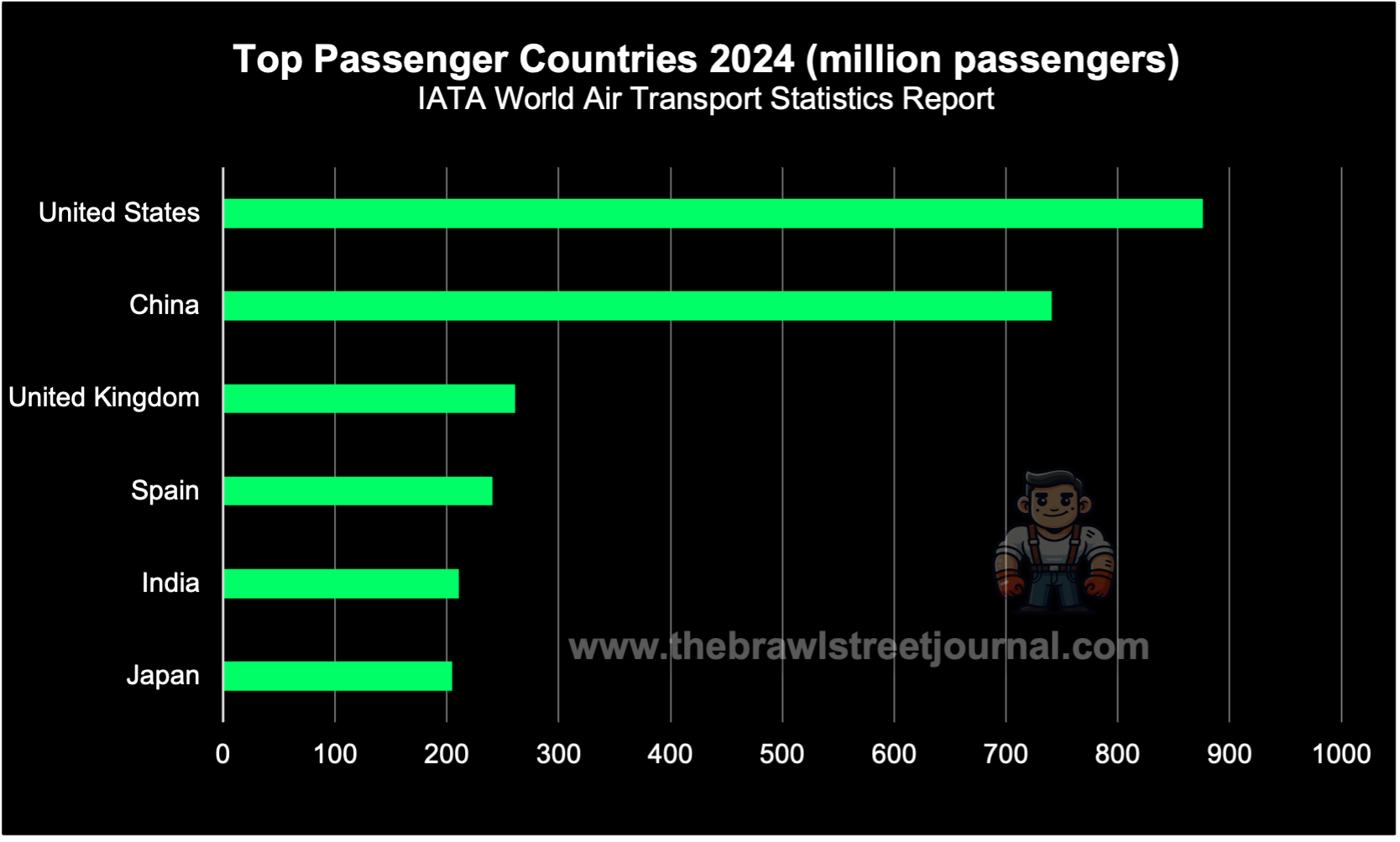
Demand is shifting toward BRICS and other emerging economies, where passenger numbers are rising fast and overall traffic is expanding. Cargo is following the same trajectory. In the first nine months of this year, China reportedly launched 169 new international cargo routes, adding over 350 round-trip flights per week.
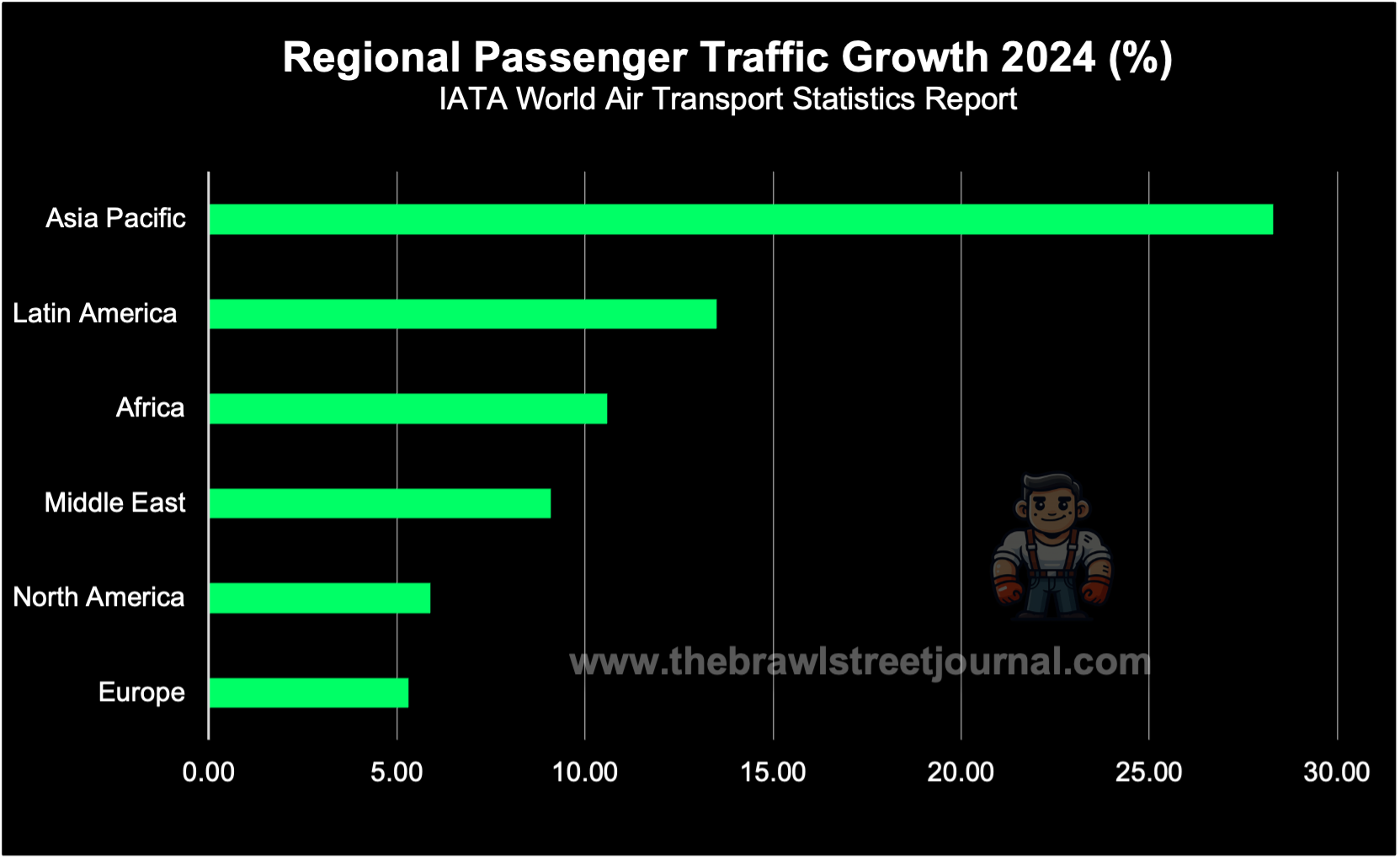
At some point, Western aerospace firms may find themselves competing not just on cost or technology but on geopolitical alignment. Current aviation sanctions, meant to punish Russia, risk laying the foundation for a regime that systematically excludes Western suppliers. Just as China dominates rare earths and pharmaceutical manufacturing today, BRICS nations now have the opportunity to build leverage in aerospace.
If this trend continues, they could use access, standards, and domestic procurement to lock out Boeing, Airbus, and Western component makers. Strategic foresight is certainly not a strength the EU’s current leading class possesses as planning barely reaches the end of an election cycle. In eroding their position in one of the last industries where the West still leads, they may once again be committing slow-motion economic suicide. Looking back, they might wish their sanctions had been a bit less “hellish.”
Sharing this article is the next best thing to racking up miles!
🔈 A few days ago I joined The Contrarian Capitalist for a wide-ranging conversation including Ukraine’s energy infrastructure, why the EU keeps shooting itself in the foot, and China’s chip control. Listen here.
The sanctions already broke Londons monopoly on maritime insurance. At some point someone will have to explain to me why Ukraine not being in NATO was worse than upending...everything
Regarding aviation technology, I wonder if the Buruvestnik powerplant could be scaled up to passenger aircraft. That was my major takeaway from the test last month. I suppose we would see it first on a bomber aircraft but the implications are significant, to put it mildly
Great article. It powerfully illustrates—for the global aviation sector—what happens when first-order emotional thinking wins the day. Like in Chess, never underestimate the other player and think many, many, many moves ahead if you want to win.
This is precisely why stories of old, like Aesop's fables, Greek mythology, and Shakespeare, remain popular for both investors and the general public: they are masterful studies of the human condition, warts and all.
To understand the horrible and destructive consequences of envy and jealousy, look no further than Othello. To see how one can make a dreaded future come true through unwise and unethical acts, read what happened to King Laius in the story of Oedipus. Or why one should be careful with hubris, as that invites the punishment of Nemesis.