
Heat Death
On the freeze of the Russia-Ukraine war.
Last November, I argued in “Entropy Wins Every Time” that the war in Ukraine would end abruptly, within the winter, because Ukraine’s energy, politics, and demographics were all suggesting rapid unraveling. At that point around half of Ukraine’s generating capacity had been knocked out, sanctions and lawfare against the president’s political rivals signaled a government that no longer trusted its position, and an exodus of fighting-age men weakened Ukraine’s defensive capabilities.
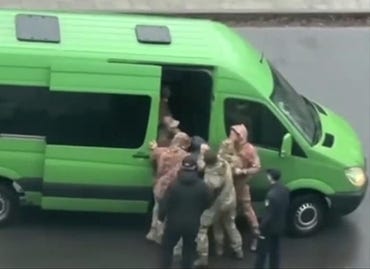
The prediction turned out to be clearly wrong while the trends described were correct. Russia did intensify its attacks on Ukrainian energy infrastructure during the winter, though the disruptions have not been severe enough to destabilize the country. The incumbent Ukrainian president remains highly alert to potential rivals. And the demographic drain has Kyiv fighting at both ends: "busification"—systematic, often violent, street-level conscription operations—is documented enough to have its own Wikipedia entry. Meanwhile, the European Commission has suggested withdrawing protection status for military-age Ukrainian men abroad, a plan Kyiv welcomed.
Ukraine’s resilience runs on European money: €90 billion planned for 2026 and 2027, out of €215.2 billion in total. In recent months, this support has emboldened Ukraine to intensify its attacks deep inside Russia, an effort Kyiv frames as pressure on Putin to agree to end the war. Oil refinery capacity has been disrupted enough to force Russia to ban the export of jet fuel until November, and Putin says he is considering a ban on diesel exports to address shortages at home. Depending on what analyst you listen to, Russia’s potential responses run from caving to holding steady to treating the poking as grounds for escalation.
But no matter how Russia responds in the weeks ahead, the element my November analysis missed points to the same outcome regardless: no peace treaty. What the model lacked was a feedback term. The point at which adaptations to a war grow heavy enough to become constituencies for it. If we account for that term, the war becomes something European leaders are almost irrevocably invested in. Time to ponder how these adaptations might shape the continent in the years to come.

Start with the largest adaptation underway. Volkswagen’s decision to cut 100,000 jobs in Germany lists high energy prices among its structural cost pressures, alongside weak demand, labor costs, and competition. This places the EU’s refusal of cheap Russian energy inside the cost structure of the largest job cut in automotive industry history:
Closing the plants at Hanover, Zwickau, Emden and Audi’s Neckarsulm site would put more than 45,000 jobs at risk, according to the people. That would add to the 50,000 cuts that are currently planned.
In absolute terms, laying off 100,000 people and axing four assembly plants would be the largest restructuring in automotive industry history.
It would be comparable to major shake-ups by GM leading up to and during its 2009 bankruptcy and in the early 1990s when it cut as many as 74,000 jobs over four years and shut or idled 21 plants.
The impact extends past Volkswagen’s payroll. The automotive ecosystem consists of hundreds of smaller suppliers that form the backbone of the German and broader European economy. But the displaced capacity already has a destination. As Euronews wrote mid-May:
Volkswagen is also exploring possible opportunities linked to defence production. CEO Oliver Blume has said the company plans to decide later this year whether military transport vehicles could be produced at Volkswagen’s plant in Osnabrück. At the same time, Blume stressed that Volkswagen would not manufacture weapons or tanks.
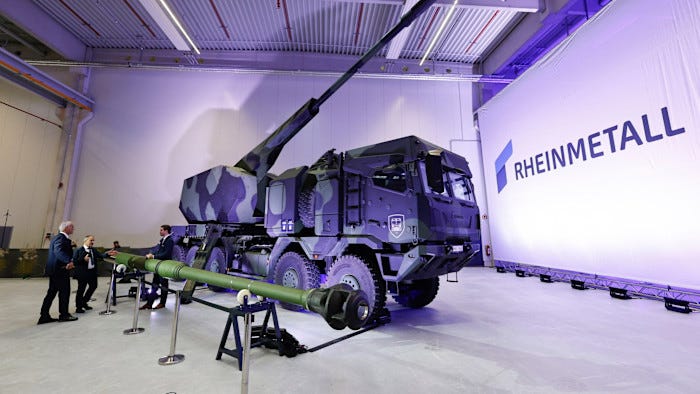
Meanwhile, defence companies are increasingly turning toward the struggling automotive sector. Rheinmetall said it is examining whether some of its current automotive supplier sites in Neuss and Berlin could be converted for defence production.
The company is also reportedly considering taking over entire factories from carmakers facing economic pressure. Among the sites being discussed is Volkswagen’s Osnabrück plant, whose long-term future remains uncertain.
That thinking extends past Wolfsburg. As Mercedes-Benz CEO Ola Källenius told the Wall Street Journal: “I think it is absolutely clear that Europe needs to increase its defense profile. Should we be able to play a positive role in that, we would be willing to do so.” The demand Källenius is offering to serve is already contracted. The carmakers are converting toward order books stretching past the end of the decade:
Rheinmetall's backlog stands at €73 billion against 2026 revenue guidance of about €14 billion. That’s five years of production sold before it is built. Leonardo's book exceeds €46 billion. Thales carries €41.6 billion in defense orders, 3.4 years of sales. According to my math, across Europe's largest weapons makers, the signed total reaches roughly €270 billion, before counting the supplier layer. The peace risk is stated exemplified by sell-side analysts at Bernstein Research, who warn that “a sustainable ceasefire in Ukraine would remove the primary catalyst for the defense sector.”
Not everyone benefits from defense spending that consumes capital without forming any, so why does no counterforce form? The Logic of Collective Action explains why small, organized special-interest groups consistently defeat large, unorganized majorities in policy-making. When a policy’s benefits concentrate on a few actors, the lobbying is worth the expense; the costs spread across millions who each lose too little to justify organizing against them. Those who do feel the pain simply leave. Chemical giant BASF inaugurated its world-scale Verbund site in China in March, the company’s third-largest after Ludwigshafen, Germany, and Antwerp, Belgium. Sector-wide investments in Europe’s chemical capacity decreased 86% between 2024 and 2025, according to a Roland Berger study.
Suppose Putin wanted a peace treaty tomorrow. One that, as peace treaties usually do, assumes the return of normal relations: trade resumes and the enemy reverts to being a neighbor. The Commission’s €800 billion rearmament decade was justified because “Russia will remain a fundamental threat to Europe’s security for the foreseeable future.” The decision to let energy-intensive industry wither was accepted on the premise that cheap Russian energy would never return anyway. A normalization treaty would be incompatible with everything committed.
Barring further escalation, this leaves the configuration that lets the commitments stand: a frozen conflict where the enemy remains an enemy and the spending remains justified. The front hardens into a line of demarcation, and the war persists at the intensity that requires no one to decide anything.
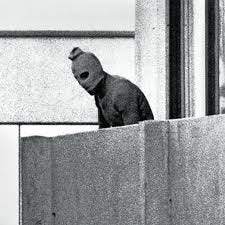
The frozen state is not quiet, though. Fifteen years after the Korean armistice, in 1968, a North Korean commando team reached Seoul to kill the president. And conflicts that don’t end tend to seep into other countries. In the 1970s, the Middle East’s conflict arrived on European soil: the Munich Olympics, the airport attacks, the letter-bomb campaigns, and the reciprocal assassinations fought out in Rome, Paris, and Oslo. Extrajudicial and extraterritorial operations of this kind are already part of this war’s repertoire. Early this week, a Ukrainian woman allegedly bombed a countryman in Monaco who did business with Russia.
That leaves elections as the remaining candidate for breaking the equilibrium. Will the bitterly opposed parties on the fringes bring about a normalization of relations? The record suggests any course correction will be made as hard as possible: Romania annulled a presidential election over alleged Russian interference, France’s courts removed Le Pen from the 2027 ballot, and Germany’s state interior ministers are preparing to change procedural rules before the likely winner can take office.
One only needs to consider the record in leadership turnover since February 2022: four (soon five) British prime ministers, six French ones, and a German chancellor removed early. Through every handover, the aid kept escalating and the rearmament plans intensified. A policy that holds through that much turnover tends to be located in the structure, not the governing personnel. If the analysis is right, there’s no pretty way out of this. Given the number of people dying and a European economy accelerating toward the abyss, the piece I would most like to write six months from now is the one dissecting why I was wrong twice.
Share this with anyone still waiting for the treaty!
📨 People in boardrooms, energy desks, and hedge funds keep forwarding this. Stop getting it late — subscribe now!
The German car industry is in very bad shape, and it's profits paid for a lot of spending by the German Govt including in support of the EU. I'm not sure where all the money will come from for increased spending on defense, social welfare, energy subsidies and the EU budget. Once the German paymaster is unable to spend on all of that then what does that mean for the fate of the EU project....interesting times indeed
Nihilists are abundant in the EU/UK. Unfortunately you will not be wrong.